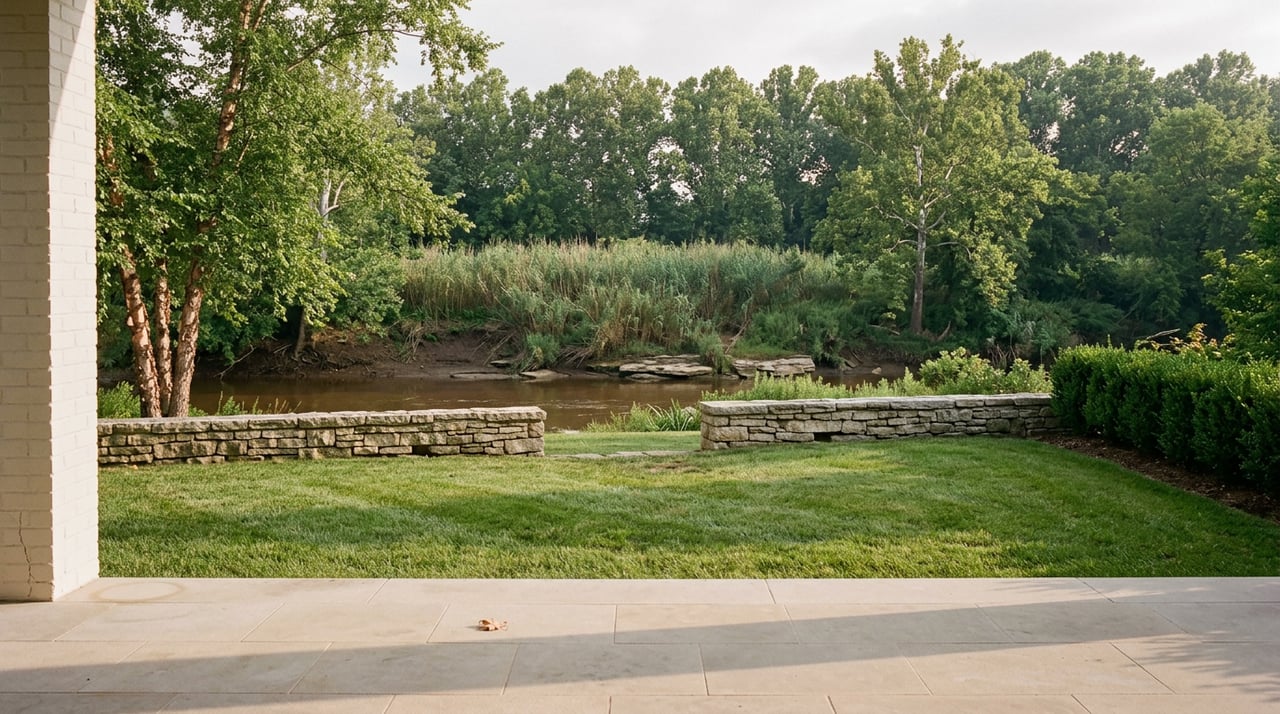
Pull into the gravel lot at Pinkerton Park on a Saturday morning in August and you will see the same scene that plays out most weekends from May through early fall: a line of cars with tubes strapped to roof racks, coolers being wheeled toward the water, someone checking a phone for a text from a shuttle driver. Almost everyone in that lot lives within fifteen minutes of the river. Most of them have lived here for years. And a fair number are floating the Harpeth for the first time, not because they never wanted to, but because they never quite worked out how.
That is the part of the river story that doesn't make it into the seasonal roundups. The Harpeth isn't hidden. It runs through the middle of town, past Pinkerton Park, past Harlinsdale Farm, under bridges most people cross without a second thought. The problem was never distance or beauty. It was the two-car problem, and until recently, nobody local had built a business around solving it.
Getting In Is Easy. Getting Back Is the Actual Trick
Rivers only flow one direction, which means anyone who wants to float from point A to point B needs a second vehicle waiting at point B, or a friend willing to do the pickup, or a plan for how to get back to their own car. That logistics gap is the entire reason companies like Float Franklin exist. Their tube route runs from Pinkerton Park down to Harlinsdale Farm, a float of about two to three hours past river birch trees and under several bridges, and the company's own address is listed as 405 Murfreesboro Road, the same address as Pinkerton Park itself. They didn't set up shop near the river. They set up shop at the exact spot where paddlers already start, because starting was never the hard part.
Float Franklin runs a second version of the same idea in reverse. Paddlers meet at Pinkerton Park, get bussed upriver to the Eastern Flank Battlefield access site off Lewisburg Pike across from Carnton, then paddle back down through downtown Franklin toward the Rec. Nobody self-organizes that logistics on a whim. You need someone to drive you up before you can paddle back down, which is precisely the service being sold.
Paddle Dog Adventures fills a third niche entirely, renting canoes and kayaks on Westhaven Lake in addition to running trips on the Harpeth and West Harpeth rivers, which means a resident who wants flat, contained water for a first trip with kids doesn't have to deal with shuttle logistics at all.
Two Rivers, Same Water
The stretch of the Harpeth that runs through Franklin isn't one experience. It's at least two, and they don't overlap much.
| Route | Put-in | Take-out | Rough Time | What It Feels Like |
|---|---|---|---|---|
| Float Franklin tube trip | Pinkerton Park | Harlinsdale Farm | 2 to 3 hours | Slow current, tree canopy, room to swim or snack along the way |
| Float Franklin kayak trip | Eastern Flank Battlefield Park, reached by bus from Pinkerton Park | The Rec | Half day with the bus ride | A working paddle through the middle of downtown Franklin |
Choosing between them isn't about skill level so much as what kind of afternoon someone wants. One is a float. The other is a paddle with a destination, and it happens to pass through the same streets people drive every day, just from the water.
The River Doesn't Care About Your Schedule
None of this works if the water isn't cooperating. Float Franklin's own site currently carries a note that August openings are "Coming Soon…IF the River Is Flowing," which is not marketing language so much as an honest disclosure about how thin the margin can get during a dry stretch of summer. The City of Franklin's Parks Department backs that up with its own guidance: anything four feet above normal river level introduces real danger, and the department directs residents to check USGS water data or the National Weather Service hydrograph before heading out, not as a formality but because conditions on the Harpeth can shift with a single upstream storm.
A calm morning on the Harpeth can turn into swift, muddy water within hours after heavy rain upstream, which is exactly why the parks department tells paddlers to check the gauge before they check the map.
That warning matters for a second reason beyond safety. The city's canoe access map exists at all because so much of the riverbank along the Harpeth is private land. The Parks Department's access site list names specific legal entry and exit points, including Ladd Park for wading and fishing when water is low, and it comes with a note that the department has mapped the river with mile markers specifically so paddlers can track where they are relative to those access points. A river that runs mostly through private property doesn't hand you a shoulder to pull over on. It hands you a short list of places where you're actually allowed to get in and out, and knowing that list in advance is most of the battle.
The Park That's Doing Two Jobs at Once
Pinkerton Park isn't just a launch point. It's 34 acres on Murfreesboro Road with a mile-long walking trail, the Tinkerbell Playground, two pavilions, and enough infrastructure that the city's own materials call it the most heavily used passive park in the entire system. That dual identity, water access on one side and everyday park life on the other, is what makes it function as the connective tissue for a Franklin summer rather than just a boat ramp with a parking lot.
This year that showed up directly in the city's Movies in the Park series. Pinkerton hosted a screening of Detective Pikachu on July 10, and the series rotated to Bicentennial Park a week later for Sonic the Hedgehog on July 17, before the schedule moves toward a colder-weather finish with Elf at Harlinsdale Farm in November. Pinkerton also runs Summer Kids' Days, themed outdoor activities organized by the City of Franklin Parks and Recreation Department that show up on the calendar without much notice because they're built for the people already local enough to check.
None of that requires the river to be flowing. That's the point. Pinkerton works as a summer plan whether the water cooperates or not, which is more than most single-purpose amenities can say.
When the Answer Isn't the River at All
Right now, the bigger draw in Franklin isn't water-based at all. The Williamson County Fair is in the middle of its run this month, going through August 15 in its 22nd year, with livestock shows, agricultural exhibits, rides, and the kind of late-summer programming that has nothing to do with river levels or shuttle logistics. It's the fallback plan for the exact week when the Harpeth might not be flowing high enough for a float, and it works because Franklin's outdoor summer was never built around one single amenity. It was built around several, stacked close enough together that a dry week on the river just means a different plan a few miles away.
That layering is the actual takeaway here. The Harpeth isn't underused because it's a secret. It's underused because floating it well depends on three practical details: where the legal access points are, who can solve the shuttle problem for you, and how to check whether the river is even running today. Once you know those three things, the two-car problem disappears and the river turns from a scenic backdrop into something you actually use most weekends from May through September.
If you're the kind of person who wants to understand a place at that level of detail, not just its schools or its square footage but the small mechanics that make daily life here work, you're already asking the right questions. Susan Gregory and her team spend as much time learning Franklin's back roads, park schedules, and river access points as they do tracking market data, because that's the kind of local knowledge that actually helps when a friend asks whether a neighborhood is really as good as it sounds. If you'd like to talk about what makes a specific part of Franklin work for the way you actually want to live, reach out and request a consultation.
This article is general information, not legal, tax or financial advice. Consult a qualified professional about your situation.